Whole genome sequencing and genetic genealogy identified Cadance Langley, a 14-year-old Jane Doe found in Arizona in 2020, leading to a 25-year sentence in the case.

After 74 years of mystery, Australia’s oldest cold case has been solved. In July 2022, researchers Derek Abbott from the University of Adelaide, and Colleen Fitzpatrick of Identifinders International announced the identity of Somerton Man as Carl “Charles” Webb. The identification was made from the DNA extracted, sequenced and genotyped at Astrea Forensics from a single 5 cm rootless hair strand.
But more mysteries remain! Check out the Smithsonian Magazine write-up or the New York Times article on this fascinating case that has caught the attention of world for over 7 decades.
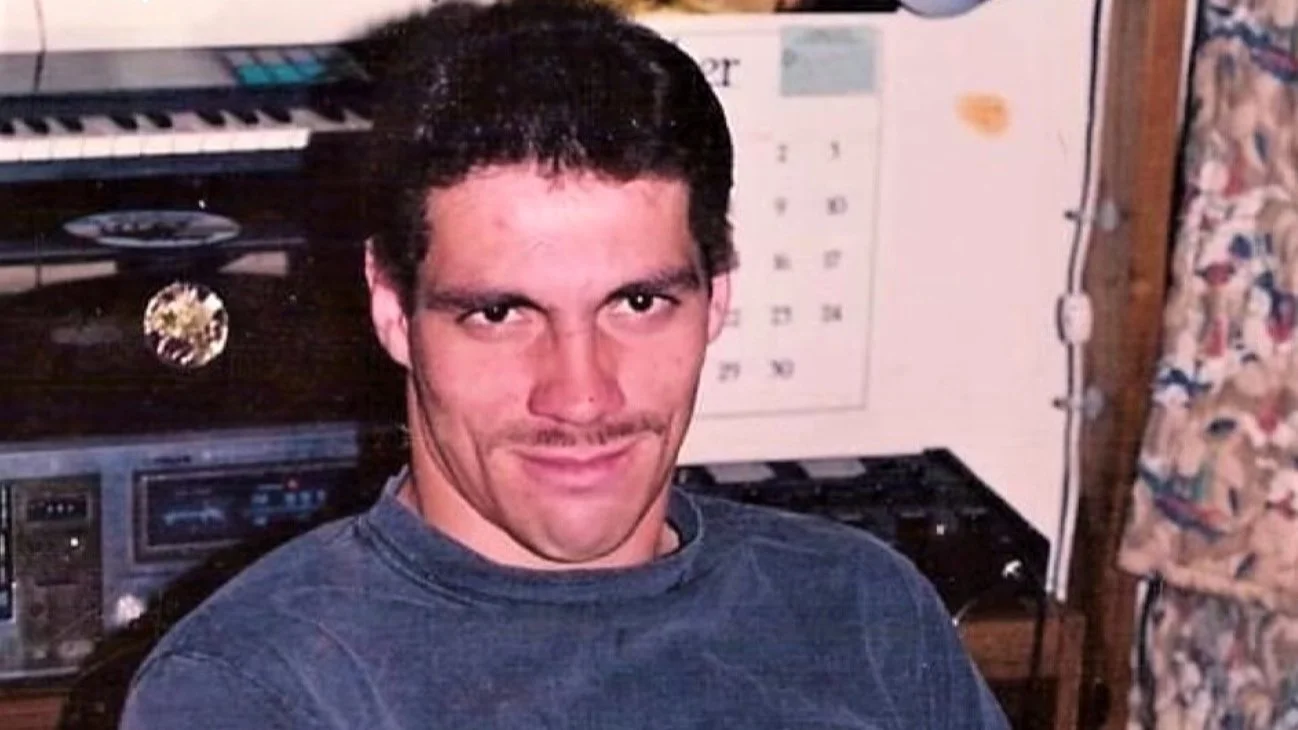
Press release of Dona Ana County Sheriff announcing identity of 1985 cold case
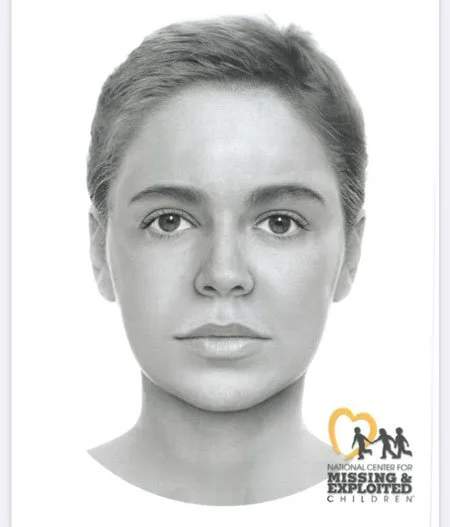
With the help of the National Center for Missing & Exploited Children, Princess Doe’s molar and eyelash were submitted to Astrea Forensics in 2021, for possible DNA extraction.
“What is so special about Astrea is that they are able to extract DNA from samples that are degraded or otherwise would provide no value,” said Carol Schweitzer, forensic supervisor at NCMEC. "We knew that if anyone could get the information that was needed, Astrea could.”
And they did.
Under Construction…
We are excited to learn about the identification of Daniel Paul Armentrout, an Alabama hitchhiker who was killed in a car crash in 1961, never identified until now. The story is described in detail in a New York Times article this month.
In February 2021, Astrea was sent bone powder from a tibia and a tooth root sampled from the Bibb County Doe. We extracted DNA using 100 mg of bone powder from each sample, yielding a total of >5 ng and >40 ng of DNA, respectively.
As announced by the National Center for Missing and Exploited Children: “Genealogy efforts led by Identifinders International LLC developed the resulting lead but a significant amount of work by others helped pave the way. #NCMEC worked alongside Bibb County in 2016 and exhumed the remains so that contemporary biometric and forensic testing could be applied. Astrea Forensics and Hudson Alpha Discovery developed the sufficient DNA file used for the genealogy research; and listeners to Gray Hughes Investigates YouTube channel raised the funds needed to cover the expenses. Every resolve is a team effort lead by talented professionals motivated to give these unidentified children their names back.
“Local police formed a task force in 1996 to investigate the deaths, which remain unsolved.
…
Then in February 2021, sheriff’s detectives, while working with the DNA Doe Project, sent some of the remains to Astrea Forensics to get a DNA sample, court records show.
DNA Doe Project conducts genealogical testing to identify cold case victims. The nonprofit says since starting its work in 2017, it has been able to identify victims in about 65% of the cases it has taken on.
Astrea Forensics, founded in 2019, uses proprietary methods to recover genetic profiles from rootless hair and other degraded samples.”
For the past 25 years, her remains had been known only as Ada Bones Jane Doe. This week, the DNA Doe Project (DDP) along with Kent County Sheriff’s Office announced the identification of skeletonized remains that were discovered in 1997 in Ada, Michigan, as Stephanie Renee Judson.
Multiple labs were involved in obtaining DNA with which to generate a SNP profile suitable for upload to genetic genealogy databases. Our lab at Astrea Forensics participated in the DNA extraction of the remains (tooth and femur) in 2020. HudsonAlpha Discovery Labs combined samples and enriched, successfully generating enough data for Kevin Lord of Saber Investigations to develop a DNA profile that could be uploaded to GedMatch. It took genealogists only one week to arrive at a candidate, later confirmed with a buccal swab from a family member.
Investigators at Fond du Lac County Sheriff's Office along with genealogist Barbara Rae-Venter identify 18-yo Amy Marie Yeary using a DNA profile generated by Astrea Forensics.
Read the National Center for Missing and Exploited Children’s LinkedIn post: https://www.linkedin.com/posts/activity-6868998435991810048-K26-
The New York Times dives into the story of three cold cases in Newton County, Indiana. Read how the application of genetic genealogy has already helped to identify two of the three murder victims - the last victim still unknown… for now.
Investigators across the US are turning to labs like ours that perform DNA services for purposes of genetic genealogy. Astrea Forensics specializes in obtaining DNA from ancient remains and as such, is the go-to laboratory for the most degraded of forensics samples.
On February 5, 2021 the Louisiana State Police (LSP) and DNA Doe Project (DDP) announced the identity of the skeletal remains found in Evangeline Parish in 2018 as those belonging to Erica Nicole Hunt, who went missing in Opelousas, Louisiana in 2016.
After previous attempts at DNA extraction, DDP and LSP sent skeletal remains to our lab at Astrea Forensics in August 2020. We extracted DNA from a premolar tooth and a vertebral body using our specialized workflow for skeletal remains. The samples were sequenced in September. DDP commenced genetic genealogy research in November 2020. Atypically, a single DDP volunteer spent approximately 49 hours researching the case and successful in identifying Jane Doe with the help of a number of agencies and individuals.
Read more about the success story here: dnadoeproject.com
The Sumter County Sheriff’s Office and the DNA Doe Project announce the identities of two victims of a 1976 double homicide as Pamela Buckley and James Freud.
The skeletal remains of Sumter County Jane and Jock Doe arrived at the Astrea Forensics lab in July 2020. Our scientists processed the remains using our specialized DNA extraction procedure. The DNA extracts were sent for sequencing shortly thereafter.
Read more about the success stories at DNA Doe Project: Sumter Jock Doe 1976 and Sumter Jane Doe 1976
The DNA Doe Project acknowledges the contributions of those groups and individuals who helped solve this case: the Sumter County Sheriff’s Office, especially Investigator Charles Bonner; Matt McDaniel for his unwavering interest in seeing the case solved; the National Center for Missing & Exploited Children; DNA Solutions in Oklahoma City and Astrea Forensics in Santa Cruz, California for extraction; HudsonAlpha Discovery for sequencing; Kevin Lord of Saber Investigations; GEDmatch and Family Tree DNA for providing their databases; and DDP’s dedicated teams of volunteer genealogists who provided SCSO with the names of the victims.
After 37 years, the King County Sheriff’s Office (KCSO) and the DNA Doe Project (DDP) announce that Wendy Stevens has been identified as one of the many victims of Washington state's Green River Killer. Our laboratory at Astrea Forensics received skeletal samples from the 1984 Jane Doe in April via KCSO and DDP. We performed DNA extractions using methods optimized for archaeological human remains and other ancient DNA samples, and sent to Discovery Life Sciences for sequencing and analysis.
As always, this case was solved thanks to the contributions of many people and agencies. Read more about the entire success story here: DNA Doe Project: Bones 10 84-054800 Jane Doe 1984